Freestanding garage shelving: read the rating, pick the material, load it safely
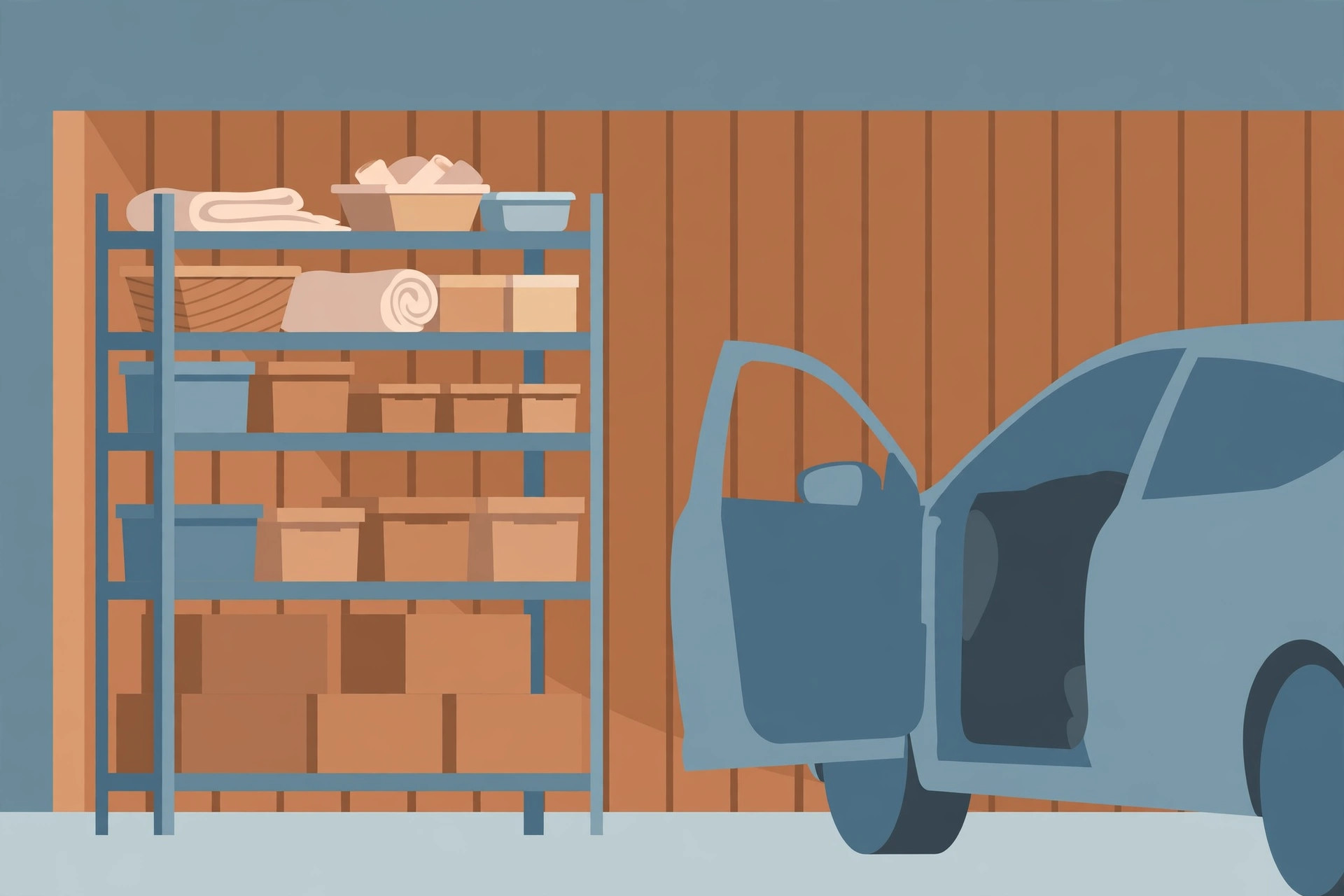
A freestanding shelving unit is the fastest way to turn a garage wall from a lean-to pile into storage — and the easiest purchase to get wrong, because every listing leads with its biggest number. The shelf that "holds 5,000 lb" and the shelf that sags under paint cans can sit side by side in the same aisle. The difference is in how the rating is written, what the unit is made of, and whether it fits the bins you already own.
Start with the rating, not the photo
Every serious listing states two numbers: a per-shelf capacity and a total capacity, both qualified by the phrase when evenly distributed. All three parts matter. The per-shelf figure assumes the load is spread across the shelf, not parked as one heavy box in the centre. The total is not a licence to load one shelf to the total — the per-shelf limit governs each shelf, and the total governs the unit. When the two disagree with your plan, the smaller applicable number wins.
Verified against Home Depot Canada listings on October 16, 2026, the residential steel range looks like this:
| Unit (as listed) | Per shelf | Total | Shelf adjustment | Footprint (W × D × H) |
|---|---|---|---|---|
| Husky 5-tier steel, 36 in | 600 lb | 4,000 lb | 1.5 in increments | 36 × 18 × 72 in |
| Husky welded steel, 48 in | 1,000 lb | 5,000 lb | 2 in increments | 48 × 24 × 78 in |
| Husky welded steel rack, 77 in | 1,500 lb | 7,500 lb | 3 in increments | 77 × 24 × 84 in |
| RS polypropylene 5-tier (datasheet) | 50 kg (≈110 lb) | — (per-shelf UDL only) | Fixed tiers | 900 × 400 × 1,840 mm |
Notice the honest gap in that table: the plastic unit's datasheet publishes only a per-shelf uniformly distributed load. That is not a defect — it is a reminder to compare like with like, and to treat any unit whose maker will not state a per-shelf figure as a light-duty unit until proven otherwise.
Steel vs plastic, by the numbers
The RS datasheet for its polypropylene 5-tier unit specifies 50 kg per shelf, tool-free assembly, and — tellingly — advises fixing the unit's back brackets to a solid surface. Compare the steel listings above: 600 to 1,500 lb per shelf, an order of magnitude higher. A professional organizer's long-running comparison adds the failure mode numbers hide: inexpensive plastic shelves bow in the middle under heavy boxes, can turn brittle over years in hot or sunlit garages, and are hard to adjust once assembled.
Plastic still has a real case. Supplier guidance for freestanding units notes plastic is rust-proof and moisture-resistant where steel can rust if its finish is damaged, and a plastic unit is light enough to move empty without help. So the decision framework is simple:
- Paint, tools, automotive fluids, anything dense: steel, and size the per-shelf rating at roughly double your heaviest shelf's planned load.
- Light, bulky, damp-prone loads — empty planters, pool gear, camping soft goods: plastic is adequate, and its rust immunity is a genuine plus.
- Mixed loads: buy steel and demote the old plastic unit to the light zone, rather than asking plastic to do a steel job "just this once."
Measure first: bins, shelf spacing, and door swing
Most shelving regret is a measurement that never happened. Before buying:
- Measure your largest bins — length, width, height — and require the shelf depth to exceed the bin's width with a finger's clearance. An 18 in deep unit and a 20 in bin is a permanent argument.
- Plan shelf heights from the bins, using the adjustment increment. A unit adjusting in 1.5 in steps can sit a shelf just above a bin lid; a unit with fixed tiers cannot, and the wasted inches come off your storage total.
- Check the car-door swing and the walkway. Stand where the unit will go, open the car door fully, and walk the path to the house door with an armful. A 24 in deep unit that fits the wall can still steal the door swing.
- Check the floor. Freestanding units assume a flat, level slab; a unit rocking on a heaved corner loads its frame unevenly before you add a single box.
A load plan that keeps the unit honest
Loading order is a safety system, not tidiness. Put the heaviest items on the bottom shelf, the lightest at the top — top-heavy loading is exactly how the organizer comparison describes plastic units toppling, and the physics is the same for steel. Keep single heavy items near the uprights rather than mid-span, spread loads across each shelf to honour the evenly-distributed condition, and leave the top shelf for things that are light and rarely used, since everything up there is lifted overhead.
Tall or heavily loaded freestanding units should be anchored. Freestanding-shelving guidance is explicit: use an anti-tip kit to anchor tall units to the wall, add cross bracing where the design allows, and consider tying adjacent units together into one stiffer run. The RS datasheet's fix-to-a-solid-surface advice for even a light plastic unit underlines the point — "freestanding" describes how it ships, not how it should live.
Assembly and loading procedure
- Assemble where the unit will stand. The welded Husky units need only a rubber mallet per their listings, and the 48 in model can be built as one tall unit or two half-height units — decide before the first shelf goes on.
- Set shelf heights to your bin plan from the measuring step, working bottom-up.
- Level the unit, then anchor it to the wall if it is tall or will carry heavy loads.
- Load bottom shelf first, heaviest items at the uprights, then work upward, lightest last.
- Step back and push-test gently at shoulder height: any sway means re-check the level, the anchor, and the load distribution before calling it done.
The six-month check
Shelving fails slowly before it fails suddenly, so give the unit the same seasonal once-over as the rest of the garage. Look for shelves beginning to bow, rust starting where a steel unit's finish has been knocked off, and plastic shelves that have turned brittle or chalky — the long-term failure modes the organizer comparison documents. Confirm the wall anchor is still tight, and confirm the load plan has not quietly drifted: garages accumulate heavy things at eye level one "temporary" box at a time, and the fix is ten minutes of redistribution, not a new unit.
What success looks like
Every shelf's load is visibly spread out, the heaviest boxes are at knee height or below, the unit does not move when pushed, car doors open clear, and you can state each shelf's rating from memory because you read it before you bought. If a shelf starts to bow, that is the unit reporting an overload — redistribute first, and treat a permanently bowed shelf as retired, not reinforced.
FAQ
Can I exceed the total if each shelf is under its limit? No — the two ratings are separate limits and both apply; that is why listings publish both.
Wire decks or solid shelves? The Husky steel listings use wire decking, which the makers credit with better visibility and less dust build-up; small items need a bin or liner so nothing slips through.
Does a bigger unit always beat two small ones? Not against a wall with a door swing or a column in it. Two smaller units that fit the actual wall beat one large unit that fits the catalogue photo.